
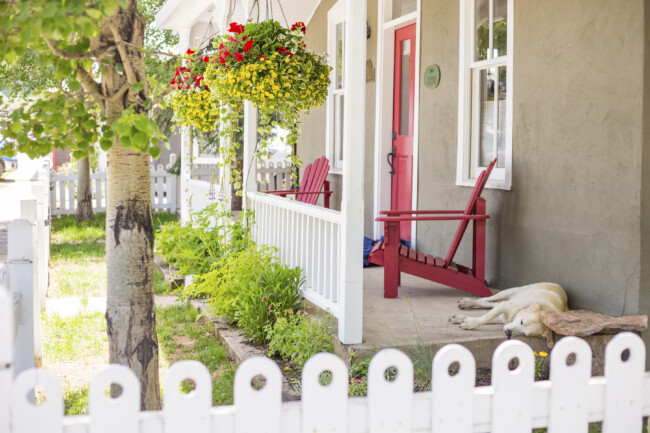

In Crested Butte, hanging baskets are a signature of summertime – from colorful front porches around town to the vibrant displays along Elk Avenue. Keeping those blooms thriving, especially in the mountains, takes a little extra care.
Nel Curtiss, owner of Rocky Mountain Trees, says success comes down to three essentials: consistent watering, fertilizing and maintenance.
Water consistently
Watering is the most important—and most misunderstood—part of hanging basket care. “There’s not really a formula,” Curtiss says. “It’s as needed, depending on the plant and the conditions.”
Mountain sun, wind, and dry air can cause baskets to dry out quickly. In sunny, windy locations, baskets may need water every day. Meanwhile, a basket hanging on the east side of a house or sheltered from wind might retain moisture longer.
The type of basket matters too. Moss-lined baskets tend to wick moisture away from the soil and dry out faster, while plastic containers hold water longer. The goal is consistency: soil should stay evenly moist, not completely dry one day and soaked the next.
Feed the flowers
Most hanging baskets are planted with annual flowers that bloom all summer—but they need nutrients to keep producing those vibrant displays. Curtiss recommends fertilizing once a week or every other week to promote steady growth and blooms throughout the season.
Deadhead
Maintenance is the third key to a full, healthy basket. Deadheading—removing spent flowers—helps plants focus on producing new blooms rather than going to seed. Instead of simply pulling off the flower, Curtiss recommends cutting or pinching the stem back to the next leaf node to encourage fuller growth.
Consider location and weather
At high altitude, placement matters. Wind can be tough on plants and quickly dry out soil, so more protected locations tend to produce healthier baskets. If a spot is especially windy or hot, choosing a plastic basket that retains more moisture can help plants thrive.
Timing is important as well. Because most basket flowers are frost-sensitive annuals, Curtiss often waits until the first week of June to install baskets for her clients and recommends covering them if an unexpected cold snap threatens.
For many mountain residents—especially those without large gardens—hanging baskets become a small but meaningful way to connect with the season. “For people who don’t have gardens, these are their little gardens,” Curtiss says. “You put your love into them, and they create these beautiful pops of color all summer long.”

